
"coffee consumption Madagascar"
200 article(s) found

A preliminary study on the Origin, Development, spread and Beverage Culture of Coffee
Coffee, tea and cocoa are the three major beverages in the world, which are consumed by about LM people all over the world, and their consumption is second only to drinking coffee in Europe and the United States. Coffee consumption is also becoming more and more popular in China and other eastern countries. However, in Chinese academic circles, there are no papers and monographs on coffee from the perspective of agricultural history and custom history.
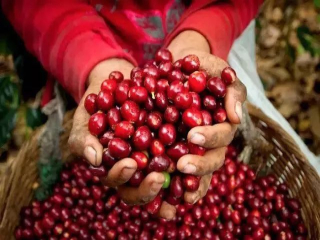
Flavor characteristics and differential description of three varieties of coffee beans introduction to the main producing countries
Comparison of the shape of three common beans 1. Arabica grows Arabica beans, and the world-famous Blue Mountain Coffee and Mocha Coffee are almost all Arabica varieties. Shape: the shape of the bean is small, the front is long oval, the middle crack is narrow and tortuous, and the arc on the back of the bean is flat, uniform in size and shiny in color.
Have a comprehensive understanding of coffee
Legend of Coffee the person who first discovered coffee: a shepherd in Ethiopia, in the fifth and sixth centuries AD. It is said that Niankadi, a shepherd with talent as a poet, herded sheep on the mountain paths of the Ethiopian plateau every day. He liked to drive the sheep home with a shrill flute, but one day the flute sounded again and there was no sign of the sheep. He looked everywhere. Find sheep
Practical explanation on the examination rules of roasting Coffee production license [GB]
The coffee tree belongs to the Rubiaceae. Out of a total of 73 varieties, only Arabica (Coffea ara-bica Linnaeus) and Canifera (Coffea canephora Pierre) are cultivated by humans. The remaining 71 varieties are wild, but of no value to growers.

Practical explanation on the examination rules of roasted Coffee production license
First, the general situation of the development of the industry. Coffee tree belongs to Rubiaceae. Out of a total of 73 varieties, only Arabica (Coffea ara-bica Linnaeus) and Canifera (Coffea canephora Pierre) are cultivated by humans. The remaining 71 varieties are wild, but of no value to growers. The 200 varieties of Arabica include the previous varieties of Mocha, Bourbon and Horse.

Coffee hunter Kawashima: searching for the real coffee taste of enlightenment
Yoshihiro Kawashima: born in Shizuoka Prefecture in 1956. In 75, he went to El Salvador alone to learn coffee cultivation and selection techniques at the National Coffee Institute. After that, it became a hot topic in the coffee industry to participate in the development of coffee farms in Jamaica, Hawaii, Indonesia and other places, and to save endangered coffee varieties in Reunion. Mi Cafeto Co., Ltd. was established in 2008.

Coffee hunter Kawashima: searching for the real taste of coffee-the taste of enlightenment
Yoshihiro Kawashima: born in Shizuoka Prefecture in 1956. In 75, he went to El Salvador alone to learn coffee cultivation and selection techniques at the National Coffee Institute. After that, it became a hot topic in the coffee industry to participate in the development of coffee farms in Jamaica, Hawaii, Indonesia and other places, and to save endangered coffee varieties in Reunion. Mi Cafeto Co., Ltd. was established in 2008.
The main producing areas of coffee in the world
The main producing areas of coffee in all countries of the world:
Coffee producing areas Coffee producing areas in the world
1 South America [Colombia] is the world's second largest coffee producer, accounting for about 12% of the world's annual production, although far less than the first Brazil's 30% to 35%, but most of them are high-quality alpine washed beans. Central Colombia is divided into several valleys by three north-south vertical mountains, of which the central and eastern mountains are the main coffee producing areas. Coffee here.

The main producing areas of coffee in the world
1 South America [Colombia (Colombia)] is the second largest coffee producer in the world, accounting for about 12% of the world's annual output, which is much lower than that of Brazil, but most of them are high-quality mountain-washed beans. Central Colombia is divided into valleys by three north-south longitudinal mountains, of which the central and eastern mountains are the main coffee producing areas. Coffee here

Coffee in the world's major coffee producing areas common knowledge
1 South America [Colombia] is the world's second largest coffee producer, accounting for about 12% of the world's annual production, although far less than the first Brazil's 30% to 35%, but most of them are high-quality alpine washed beans. Central Colombia is divided into several valleys by three north-south vertical mountains, of which the central and eastern mountains are the main coffee producing areas. Coffee here.
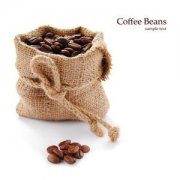
Analysis of producing countries of High-quality Coffee beans in Coffee Bean producing countries
1 South America [Colombia (Colombia)] is the second largest coffee producer in the world, accounting for about 12% of the world's annual output, which is much lower than that of Brazil, but most of them are high-quality mountain-washed beans. Central Colombia is divided into valleys by three north-south longitudinal mountains, of which the central and eastern mountains are the main coffee producing areas. Coffee here

The basic knowledge of coffee in the main producing areas of coffee all over the world
1 South America [Colombia (Colombia)] is the second largest coffee producer in the world, accounting for about 12% of the world's annual output, which is much lower than that of Brazil, but most of them are high-quality mountain-washed beans. Central Colombia is divided into valleys by three north-south longitudinal mountains, of which the central and eastern mountains are the main coffee producing areas. Coffee here

Coffee bean varieties: the historical cause and classification of cocoa bean varieties are explained in detail.
Morphological characteristics of the trunk: up to 12 meters high, trees, wide branches, branchlets brown pubescent. The trunk is solid and the cacao trunk has a luxuriant crown. Leaves: alternate, elliptic, leathery, 20-30 cm long, slightly stellate hairy on veins. Flowers: old cauline flowers, blooming directly on the trunk or main branch, about 1.8 cm in diameter; Calyx pink, smelly. 5 deep cracks; petals 5, lower sunken helmets
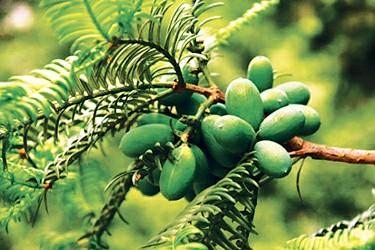
Coffee cultivation: what are the differences between different tree-shaped coffee beans in different producing areas?
There are four kinds of coffee trees in the world, of which only two are of real commercial value and are planted in large quantities. One is the Elaraby species (ARABICA), the other is the Robasta species (KOBUSTA). Different varieties of coffee beans have different flavors, but even the same varieties of coffee trees have their own unique flavors due to the influence of different soils and climates. Allah

World Map of Coffee beans-- introduction of 53 coffee producing areas in the world
twenty-one. Venezuela oil was once considered the main export of Venezuela (Venezuela). Although coffee trees were introduced from Martinique in 1730 and Venezuela, coffee production was almost abandoned at the height of the oil industry. Recently, coffee plantations have begun to recover, with original Tipica and bourbon coffee trees and new plantations

Arabica coffee beans, what is the knowledge of coffee cold all over the world?
Professional coffee knowledge exchange for more information about coffee beans, please follow the coffee workshop (Wechat official account cafe_style) one. Costa Rican coffee has full grains, ideal acidity and unique strong aroma. Tarrazu of Costa Rica is one of the major coffee producing areas in the world. The volcanic soil in Costa Rica is very fat.

Which coffee beans are Arabica beans? what kinds of Arabica coffee are there and which ones taste better?
Professional coffee knowledge exchange more information about coffee beans please follow the coffee workshop (Wechat official account cafe_style) Arabica coffee category one. Costa Rican coffee has full grains, ideal acidity and unique strong aroma. Tarrazu of Costa Rica is one of the major coffee producing areas in the world. Costa Rica
How to process coffee
The History of Coffee 2008-01-02 12:40 A legend of coffee was discovered around the 5th century AD on the Ethiopian plateau, a young shepherd accidentally found his sheep eating the red fruit of a bush and became very excited. the young shepherd thought it strange, so he picked a few fruits and tasted it, and immediately became excited. Soon, the shepherd's hair
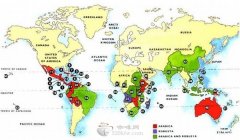
Introduction of Coffee from 53 Coffee producing areas in the World
one. Costa Rican coffee has full grains, ideal acidity and unique strong aroma. Tarrazu of Costa Rica is one of the major coffee producing areas in the world. Costa Rica, with its fertile volcanic soil and good drainage, is the first country in Central America to grow coffee and bananas for commercial value. Coffee and fragrance